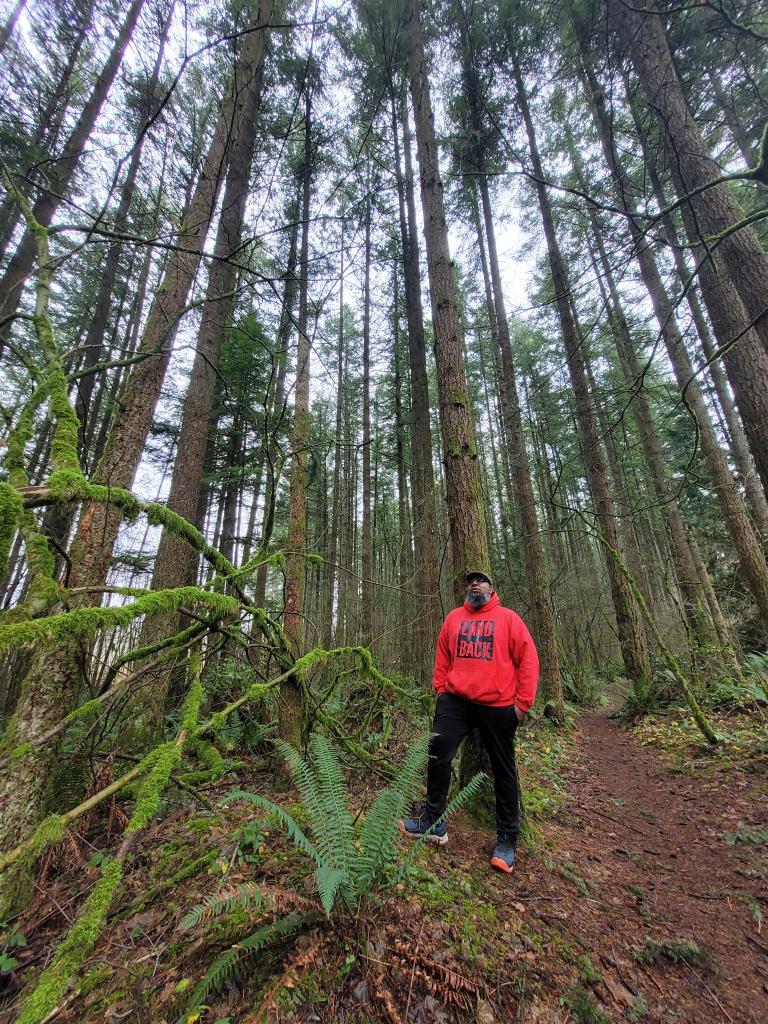
I am a multigenerational, transnational byproduct of British colonialism whose background connects South Asia, the Caribbean, and North America (specifically, Mi’kma’ki).
I teach at Dalhousie University in the departments of International Development Studies and History and is cross-appointed in the department of Political Science.
I have a PhD in Political Science with specializations in International Relations, Comparative Politics, and Political Economy from Carleton University.
I research the colonial present, or the many ways contemporary society remains mired in epistemic, ontological, institutional, and cultural colonial violence. I study structures (e.g. race, caste, class, patriarchy) rooted in and exacerbated through imperial encounters that have been sanitized of their colonial histories and presented as the norm in the present day. Many generations of scholars and activists have written about what we might broadly call “the colonial present” and I use it to help frame my work and the work of others because I have seen the concept evoke interest and curiosity instead of only defensiveness, and I believe this is an important opening for public education. With this intellectual framework in mind, I am currently engaged in four overlapping areas of research:
Sovereignty
The history and ethics of sovereignty, as a diverse practice that was forced to conform to Eurocentric norms from the 19th century onwards. I have a SSHRC Explore grant on the subject of “pluriversal sovereignty” that has supported a book project under contract with Manchester University Press entitled “Imperial Encounters in Sri Lanka: Pluriversal Sovereignty and the State” as well as shorter theoretical work in journals, chapters, and blogs.
Settler-Colonial Studies
Settler-colonial studies and decolonial options grounded in life as an immigrant to Mi’kma’ki, or the Canadian Maritimes. This work involves the legacy of citizenship as a mode of colonization as well as the political and ethical obligations that extend from taking Indigenous sovereignty seriously.
Racial Resilience
While race is not real in a material sense, race and race-like position (e.g. caste) has endless sociological and political significance. I work on directly meeting the multifaceted racial fragilities that white supremacy produces to build racial resilience. This research is informed by two co-facilitated projects: “Safe Space For White Questions” with Dr. Alex Khasnabish and “White Fragility Clinic” alongside Dr. Gaynor Watson-Creed in the Dalhousie Faculty of Medicine.
Racialization of Asian International Students
I am part of a SSHRC Insight Grant–funded project studying experiences of racialization of Asian international students in Canadian universities, where I work as the Co-Investigator and project lead for our Halifax case study.
From the first two research areas, I have published peer reviewed research articles and chapters in leading disciplinary venues. This work has also engaged popular culture and nationalisms, particularly with hit Asian productions like the Indian film My Name is Khan and the Singaporean state television soap opera, The Little Nyonya. I also emphasize the scholarship of teaching, with a recent publication entitled “Solidarity Is a Verb: Teaching Development on Stolen Land” and ongoing work.
The third and fourth research areas are grounded in the knowledge built from the first two, but responsive to the ongoing political crisis of structural white supremacy and resurgent white nationalism in Canada that I have felt compelled by my students to confront as a racialized professor since 2016. My early thinking on this is published in my 2019 article, “Pathological White Fragility and the Canadian State” and further developed in my recent article with Nissim Mannathakkaren, “Imperial Afterlives: Citizenship and racial/caste fragility in Canada and India” that looks at structural white supremacy in India and Canada through the lens of citizenship and national subjectivity. I am also working on two books with Fernwood Publishing on the topic: Frequently Asked White Questions (with Alex Khasnabish) and How To Talk to Your Racist Uncle: A Manual for Racial Resilience.
 Ajay Parasram