I wrote this piece 8 years ago, and have been sharing annually hoping that the next year might show some evidence of society learning the lessons of war, imperialism, and the ease at which we might work towards eliminating human and ecological suffering. Over the last 8 years it’s become pretty clear that we’re moving in the opposite direction, with protracted continental war in Europe, the physical annihilation of Gaza and ongoing genocide of Palestinians, and genocidal violence continuing in Sudan, Burma, Xinjiang to name just the ones most well known.
What disappoints me the most right now, and I would dare say it would disappoint the multiracial soldiers who survived WW1 and established a day for peace in November, is that the Canadian government is weaponizing fear and insecurity arising from the United States to justify an enormous investment of upwards of 5 % of GDP to transform the Canadian economy into a global engine of war in the name of security. The working definition of security doesn’t even include basic things like the human security framework that Canada helped to construct in the 1990s-2000s, nor does it include things like development assistance and overseas aid that tries, however incompletely, to address the root causes of insecurity and human suffering. Heck, this national realignment to “security” doesn’t even make it clear how Indigenous communities in the “critical mineral” and arctic factor into the decision making of projects that threaten the viability of their unceded lands, let alone the well documented criminal behaviour of Canadian industries abroad.
The Carney government is using national fear to create favourable investment opportunity to transform Canada into a war economy, and as Lloyd Axworthy said on Frontburner yesterday, while he is understandably flying all over the world trying to make new trade deals he’s been shunning left wing leaders and those interested in other aspects of global security, including Brazil who we could be working with on forest preservation and rejuvenation. Or Cuba, who could teach us a thing or two about universal health care. Capitalism is not a treatment for war and insecurity, it is the fuel that ensures it burns every corner of the globe. At times like this, I take solace in music, and this line from a version of the Internationale seems fitting:
No more deluded by reaction
On tyrants only we’ll make war
The soldiers too will take strike action
They’ll break ranks and fight no more
And if those cannibals keep trying
To sacrifice us to their pride
They soon shall hear the bullets flying
We’ll shoot the generals on our own side.
Here’s the original piece from 8 years ago, written just to help explain in a compassionat way why many of us in the global majority don’t wear poppies. It was published in the Nova Scotia Advocate and transcribed and linked below, with my ongoing gratitude and admiration for Robert Devet, who enthusiastically encouraged me to publish this in the first place. Rest in power, Robert.
Lest We Forget Empire – Ajay Parasram
On the morning train between Ottawa and Toronto, I awkwardly declined a poppy in the moments ahead of 11 am. The train conductor came on the PA system to invite the captive audience to observe a moment of silence for the 100th anniversary of the Armistice. The Via Rail employee handing out poppies looked at me with puzzlement when I declined his offer of a poppy.
I’m writing this short piece not because I’m tired of being looked at like an ungrateful recipient of European enlightenment (though I am), but because I realize that for most people raised on the textbook understanding of world history, it’s not intuitive why I (and many others) aren’t interested in participating in Remembrance Day.
I have no qualms with people remembering their relatives who fell, but if we’re seriously interested in in the project of peace, we need to be more truthful about world history.
The outbreak of World War 1 is historicized as the end of a hundred years of peace, but for whom? Relative peace in Europe meant the externalization of European violence on the colonial world. The collapse of that peace with the assassination of the Archduke Ferdinand represents an extension of European imperial hubris. We must ask ourselves, how many millions of Africans and Asians died for nothing more than European imperial competition in the so-called “peaceful” 19th century? And that says nothing of the millions of colonial soldiers ordered to fight in the imperial wars of the early 20th century as second-rate human beings, only to return home with their throats firmly under the boot of imperialism.
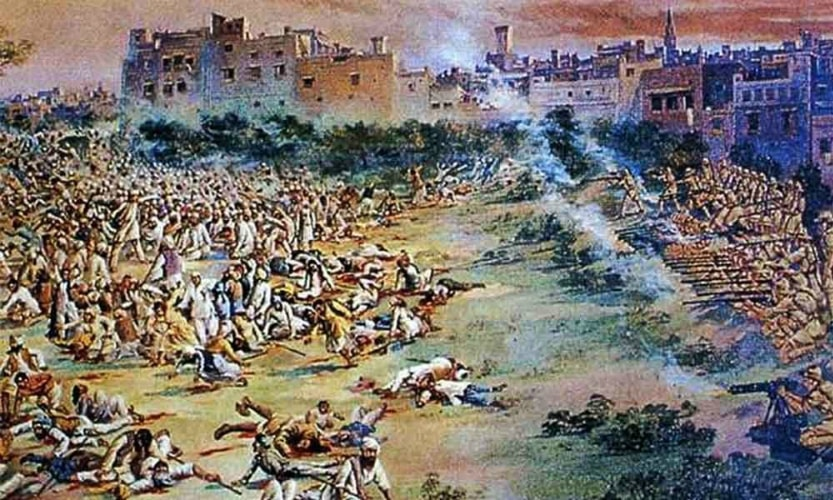
In the wake of Canada 150 and its grotesquely uncritical engagement with the fact that the last 150 years represents one of the darkest periods of Indigenous history across the continent, we must do better than remain mired in imperial nostalgia. Next year, we’re going to go through this again because it’ll be the 100th anniversary of the Treaty of Versailles — a treaty so poorly thought through that it all but set the stage for World War 2. I hope that when that happens, we also take time to remember how the Allies rewarded India’s contribution of 1.3 million soldiers that got them to Versailles by trapping innocent men, women, and children at Jallianwala Bagh in Amritsar for the crime of peacefully organizing for independence from colonial rule. Colonel Reginald Dyer ordered them all shot, and did not end his assault on these non-violent organizers until his troops ran out of ammunition.
I am empathetic to the noble pursuit of peace and also to the many overlapping reasons so many people choose to wear a poppy. I used to dress in black and volunteer wherever I could to play the Last Post for Remembrance Day when I was a teenager. I even tried twice to join the reserves, and they never called me back. I started thinking differently about Remembrance Day around that same time — 2003 — because in that context the poppy was being mobilized as a justification for the invasion of Iraq by a new group of Allies, a “Coalition of the Willing,” who senselessly set in motion a chain of events that could have been avoided if the anti-war message of the poppy still meant what it was supposed to.
So remember your dead with a poppy if you care to, but keep in mind that when I refuse to wear one, it’s because I’m remembering mine.

